
How to Paint Realistic Skin Tones
Recently a subscriber wrote in asking how to paint skin in oil. At first I was completely overwhelmed by the question: Entire courses and years of study go into learning to paint portraits and figures. The human form and head are widely regarded as the most challenging of subjects; how could this possibly be boiled into a simple set of concepts?
After much thought, I realized this complex topic can be reduced to a handful of simple concepts. It still doesn't make painting realistic skin easy, but keeping the following 5 principles in mind will get you a long way toward achieving lifelike skin tones in your paintings.
1) Realize That Matching Skin Tones is NOT The Goal
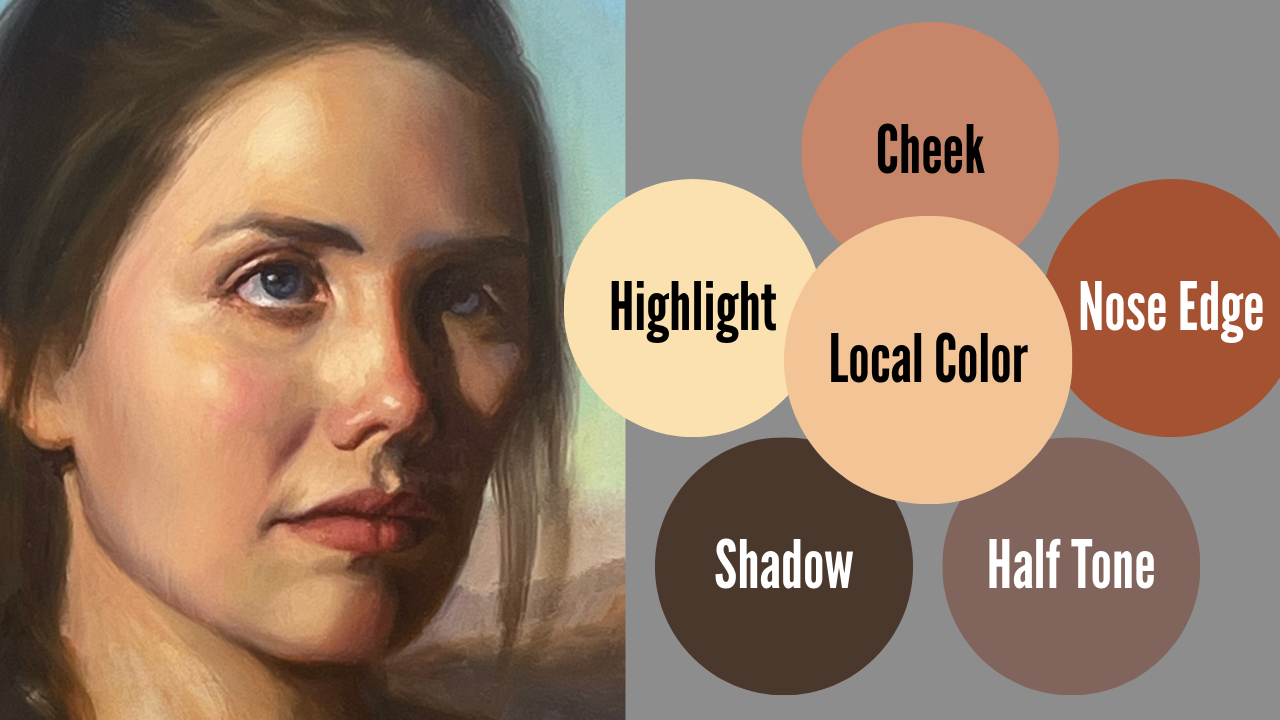
You're not picking out make-up colors for people: You're trying to create the illusion of light and shadow on a two-dimensional surface. Perhaps a small percentage of your paint mixtures will truly match your subject's skin tone (also known as 'local color'), but 95% of the colors you need will be lighter, darker, and even a different hue or intensity than their actual skin tone.
So, throw the question of "What color is their skin?" out the window and replace it with, "What color is this shadow? What color is in this light area? What does this half-tone look like?" This will get you so much further.
2) Skin Tones Aren't as Different as You Think
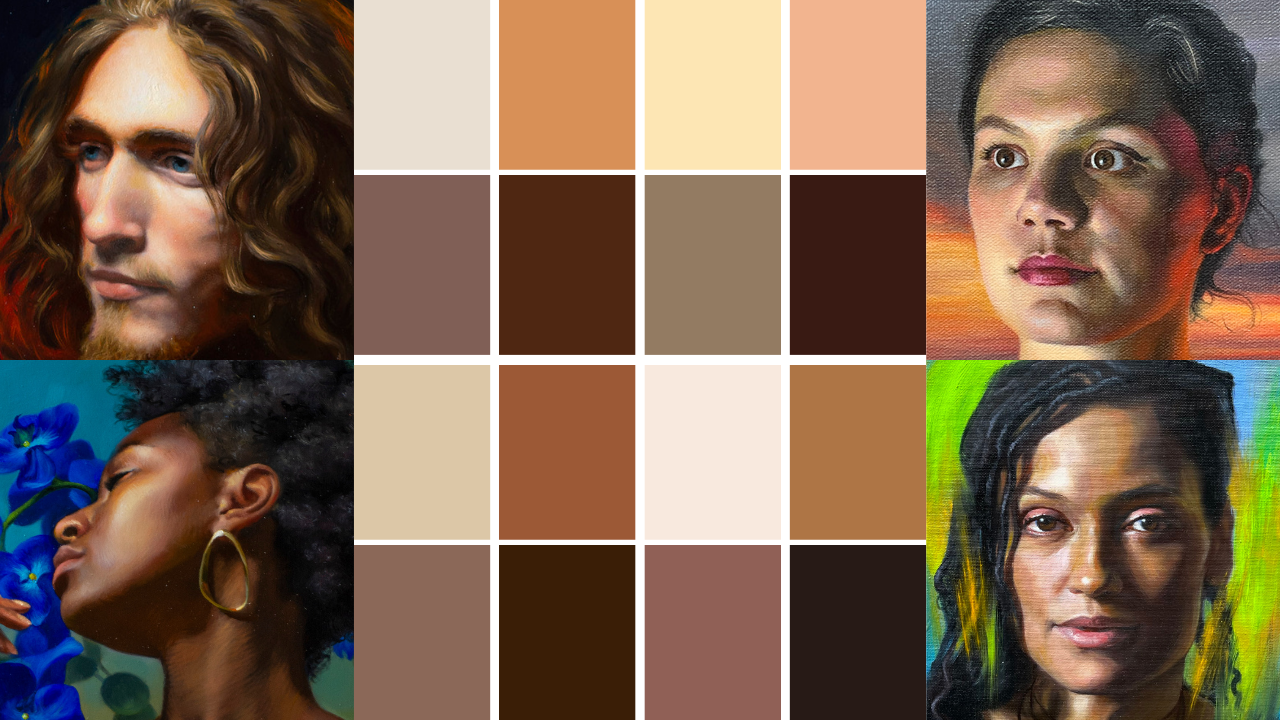
One of the biggest false assumptions I hear is the idea that you need to choose paint colors based on the subject's skin tones. The truth is: Practically any red, yellow, and blue or black combination plus white will yield every skin tone in the world.
This is because ALL people are some variety of a low intensity orange. Some people are a darker or lighter version of this orange, some have more or less intensity or chroma, and some have slightly more yellow or red in that orange. These differences are all actually very small, and once you break down the individual colors used in paintings of a variety of people, you'll find the same colors get used over and over again.
3) Make Value the First Priority
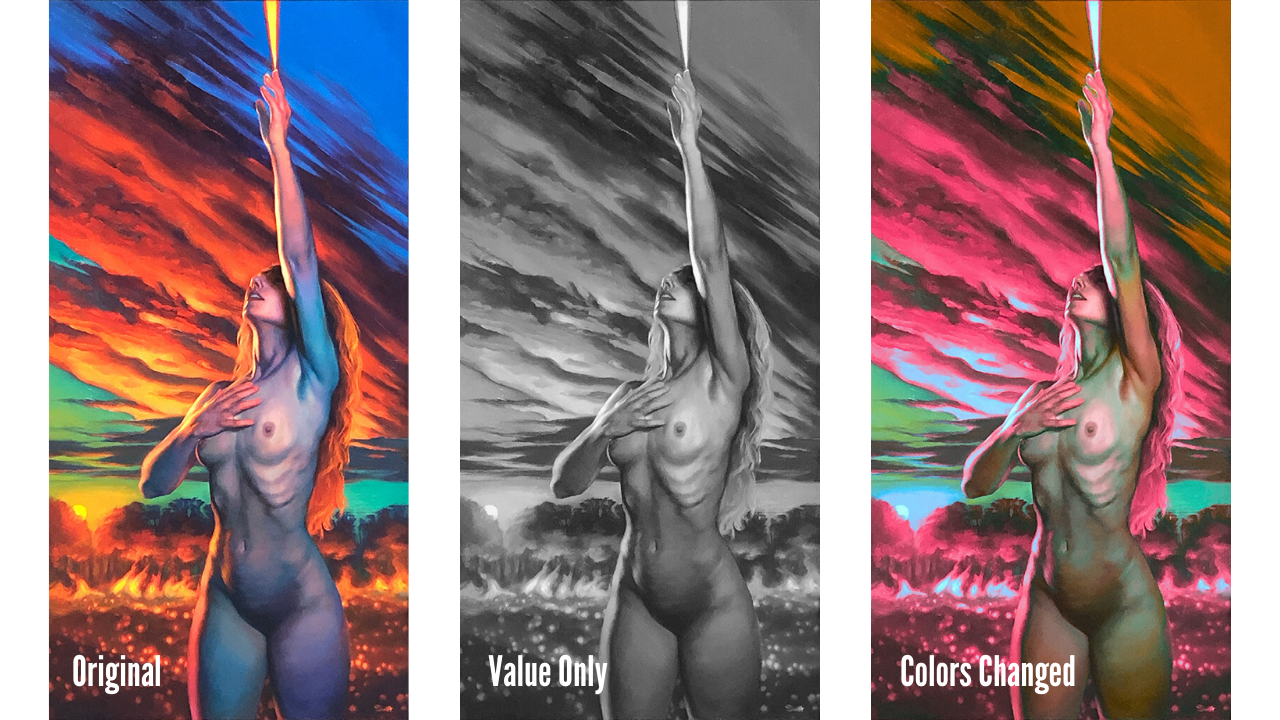
Want your portrait or figure to look dimensional and not flat? Then you need to make value the biggest priority in your painting. Value, or the relative light or dark of a color, is what tells the eye whether surfaces are facing away or toward the light source, and this is the root of form. If you lack organized values, you will not have convincing depth in your painting.
In fact, you can play with all kinds of aspects of the color, including changing the hue or intensity, or even use unrealistic skin tones as shown in the painting, above, and if you've maintained good value relationships, you'll still have great form. Not only does the original figurative painting have unrealistic skin tones that read well, but even the digitally altered one (to play with color just for this article) has form.
4) Use Hue Shifts to Give Life
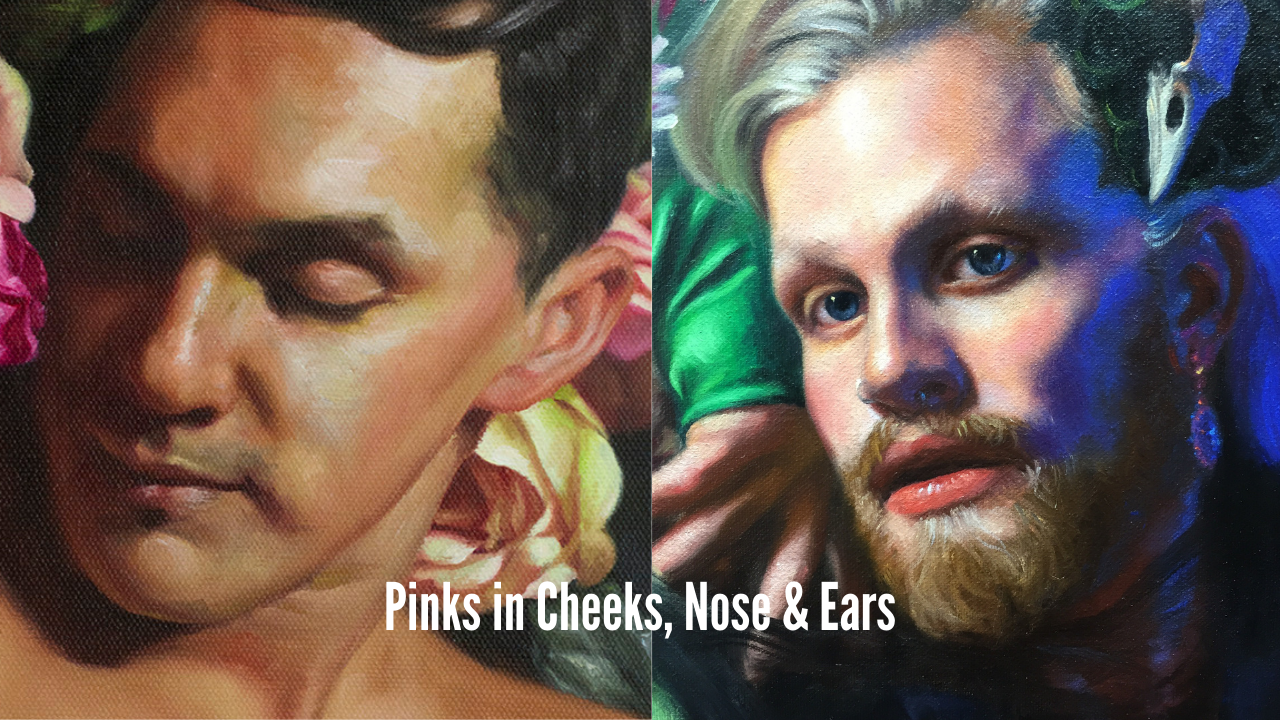
Photographs and make-up often hide colors that we see more readily in life, and can leave paintings look more like wax figures than a living, breathing human. For this reason, it's a great idea to search for or even invent some hue shifts so that your paintings reflect a live person.
People have capillaries closer to the surface of their skin in certain areas, like the cheeks, nose, ears, hands, feet, and knees. Adding a little bit more red or pink in these areas can breathe life into otherwise plastic-looking skin tones.
5) Cool It Off Here and There
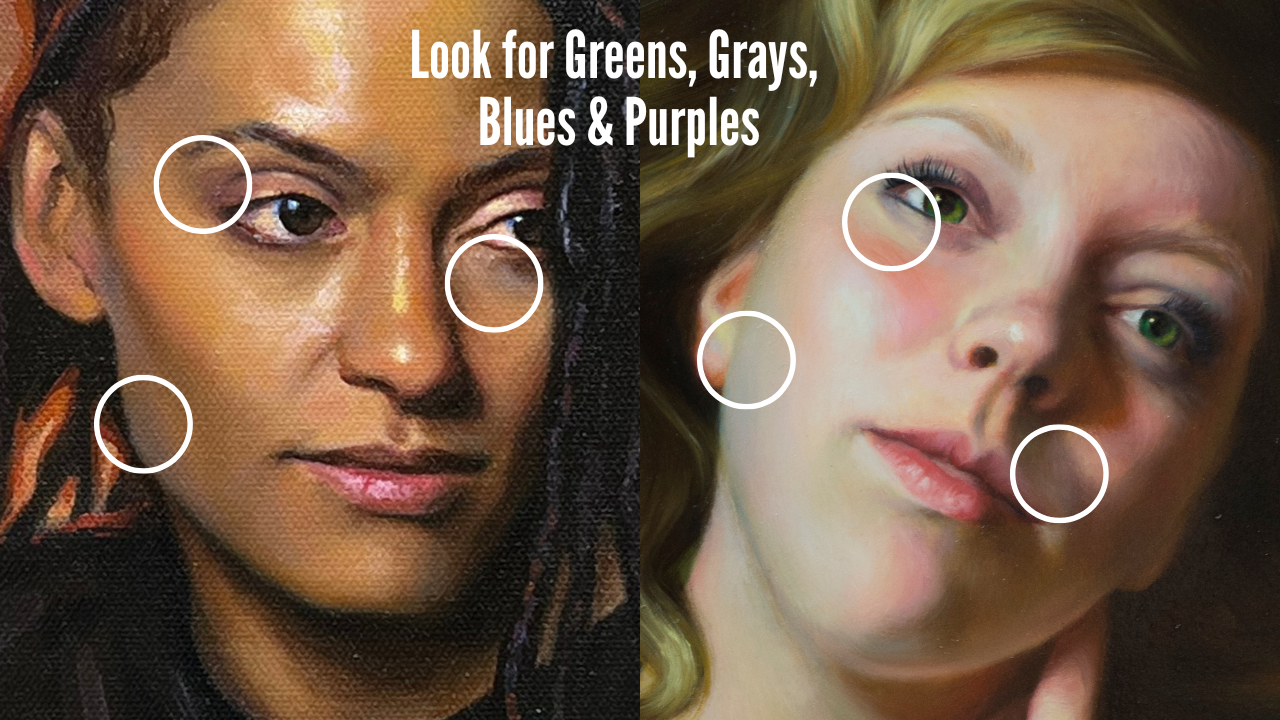
Similarly, some areas of the human form have more veins, or don't get as much sunshine or pigmentation, and may appear cooler. Other areas like half-tones appear cooler or more gray, and the environment may also bounce various colors onto skin tones as well. Searching for and expressing these cooler colors balances the warmth of the rest of the skin tones and helps those warmer colors pop.
Ready to Tackle Realistic Portrait Painting?
Portrait Painting in Oil, the live online and in-studio course, is coming up soon! Check the link here for details and registration: https://www.schoolofrealistart.com/portrait-painting-details
Can't make the live class? There's a pre-recorded option, too! https://www.schoolofrealistart.com/portrait-painting-video-course
With both options, you'll learn how to get an accurate likeness, show form through realistic shading, and match skin tones in oil paint. Bring your own references to class (or use the references provided) and leave with the skills to create countless beautiful portraits at home.
Stay connected with news and updates!
Join our mailing list to receive the latest news and updates from our team.
Don't worry, your information will not be shared.
We hate SPAM. We will never sell your information, for any reason.

