

What is Classical Drawing?
Have you heard the terms Classical Drawing, French Academic Techniques, Atelier Methods, or Sight-Size, and wondered exactly what they mean? In this article, I'm going to share with you my perspective as an artist who works with and teaches these approaches alongside a large variety of other techniques.
The Short Explanation
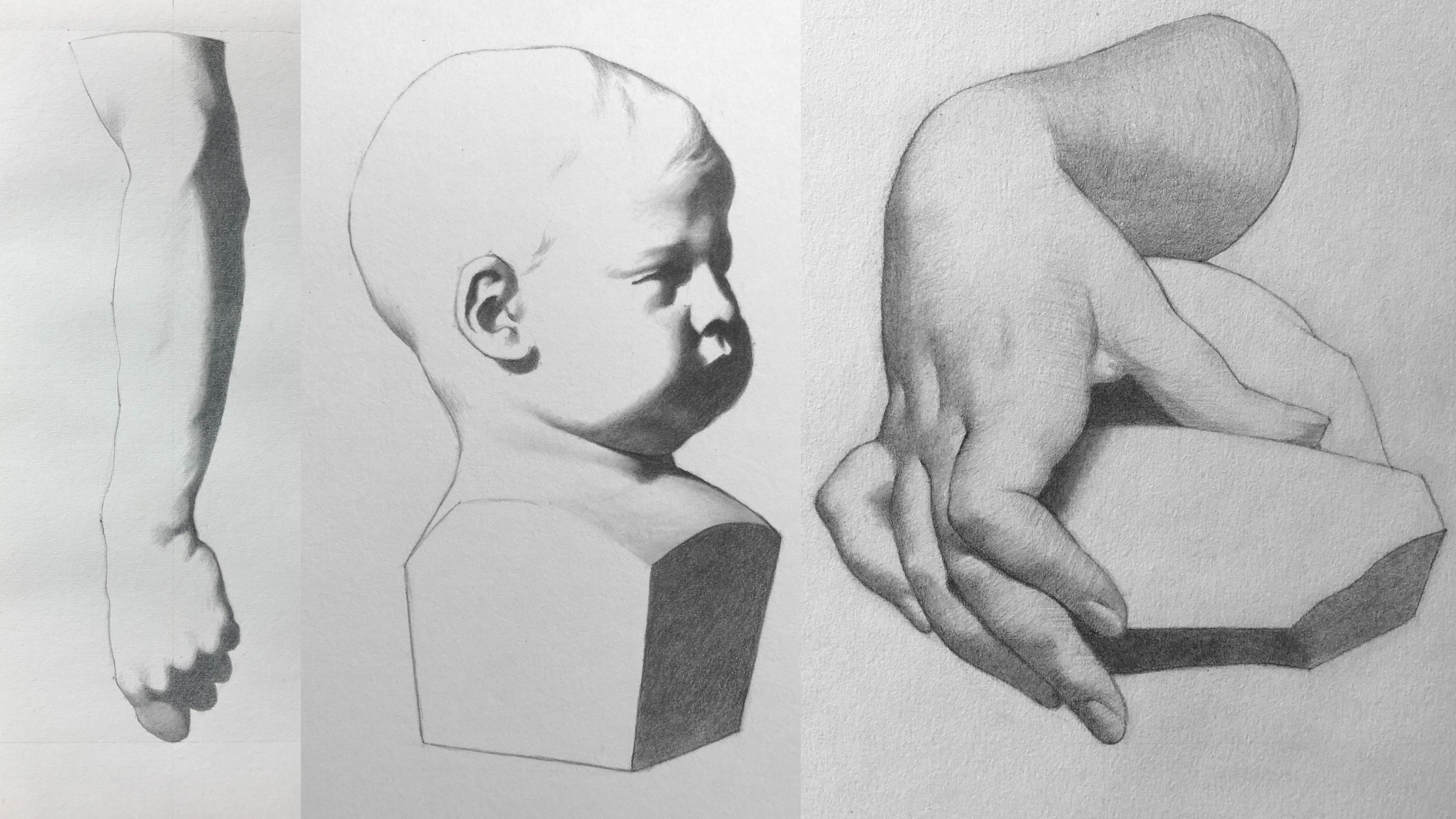
Bargue Plate copies done in the Classical Drawing method.
These approaches to drawing are logical and relatively finite methods of achieving proportion and form. The term 'Sight-Size' refers to the practice of recreating the literal dimensions of the subject as they appear from your point of view. This usually involves using some kind of tool to copy over measurements.
There's also generally a pattern of beginning training with simple tasks before gradually and logically moving through more complex work. "Bargue Plates" are printed images that are copied by students, and the easier ones consist of simple, small line drawings. The images gradually get more complex and eventually include portraits, human figures, and a couple horse head options. Once working from a flat image is mastered, the student is to move on to working from a plaster cast, then to still lives, then the live human model.
The Long Explanation
History of the French Academic Technique
With the caveat that I am no art historian, and this is all my own recollection and opinion:
In art history class I learned that the Impressionists rebelled against the French Academy. The story as I heard it is that the Academy set standards for how pictures were to be made, and controlled which artists were to have the most desired careers of portrait and history painting, and which were to be relegated to lesser still life and genre painting, based on how well they adhered to and achieved these abilities. The Impressionists didn't like the Academy's rigid set of ideas, plus metal paint tubes opened up a world of possibilities beyond stuffy studio paintings, so they set off with a completely different set of goals.
While I, personally, thoroughly enjoy what the Impressionists did, what pains me is that subsequent art movements threw the baby out with the bath water. The entire idea of having drawing standards or systematic ways of learning to show form and realism were deemed not only unnecessary but detrimental to the expression of an artist. The cumulative knowledge of visual artists was erased from a great majority of our art education for a century.
Luckily, some individual artists kept the tradition alive, and around the time I was coming of age a few modern "ateliers" were popping-up which centered around studying these classical methods. This has only grown in popularity over the last 20 years as more and more artists wish to learn solid representational realistic drawing and painting techniques.
The Charles Bargue Drawing Course
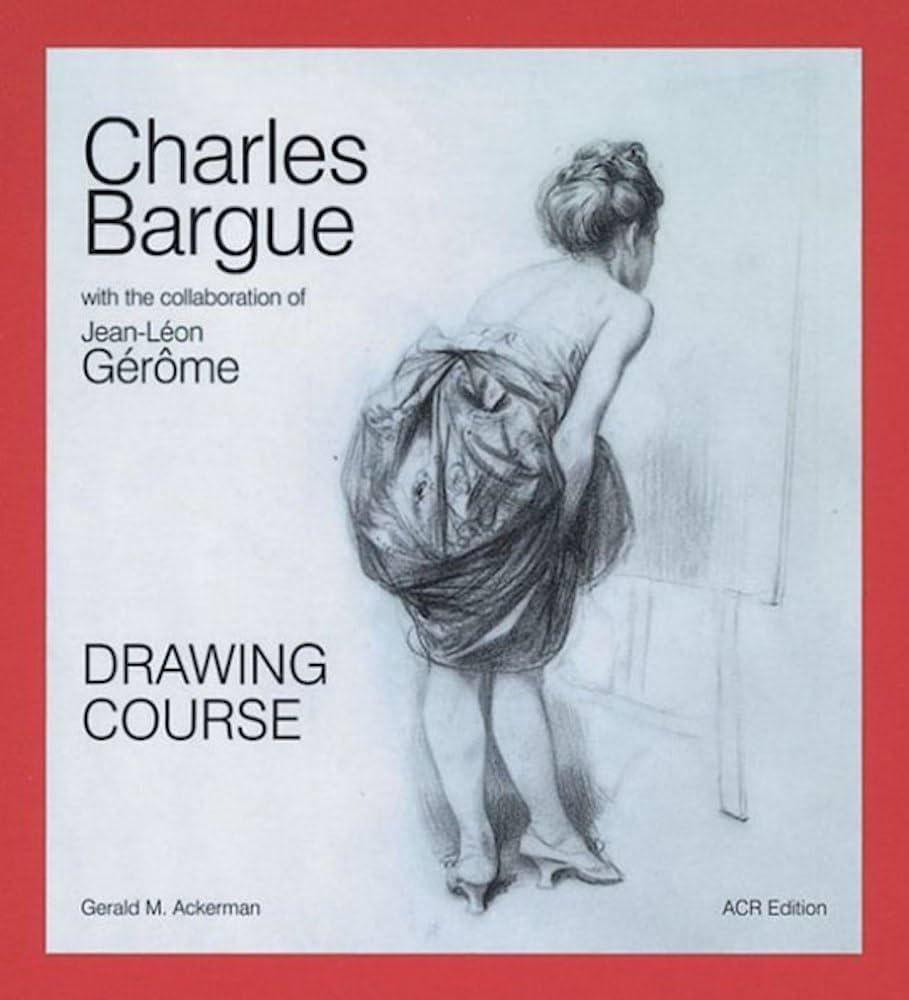
One of the foundations of the Atelier approach is the use of Bargue plates in early training. The Charles Bargue Drawing Course was published in 1866 and consisted mainly of a series of lithographs in increasing complexity designed to walk students through the basic process of creating an accurate image. The artist Jean Leon Gerome hired lithographer Charles Bargue to create drawings from plaster casts from which students would study. In 2003, the Dahesh Museum republished the course with additional text and images. My recollection is that the lithographs were pieced together from various collections.
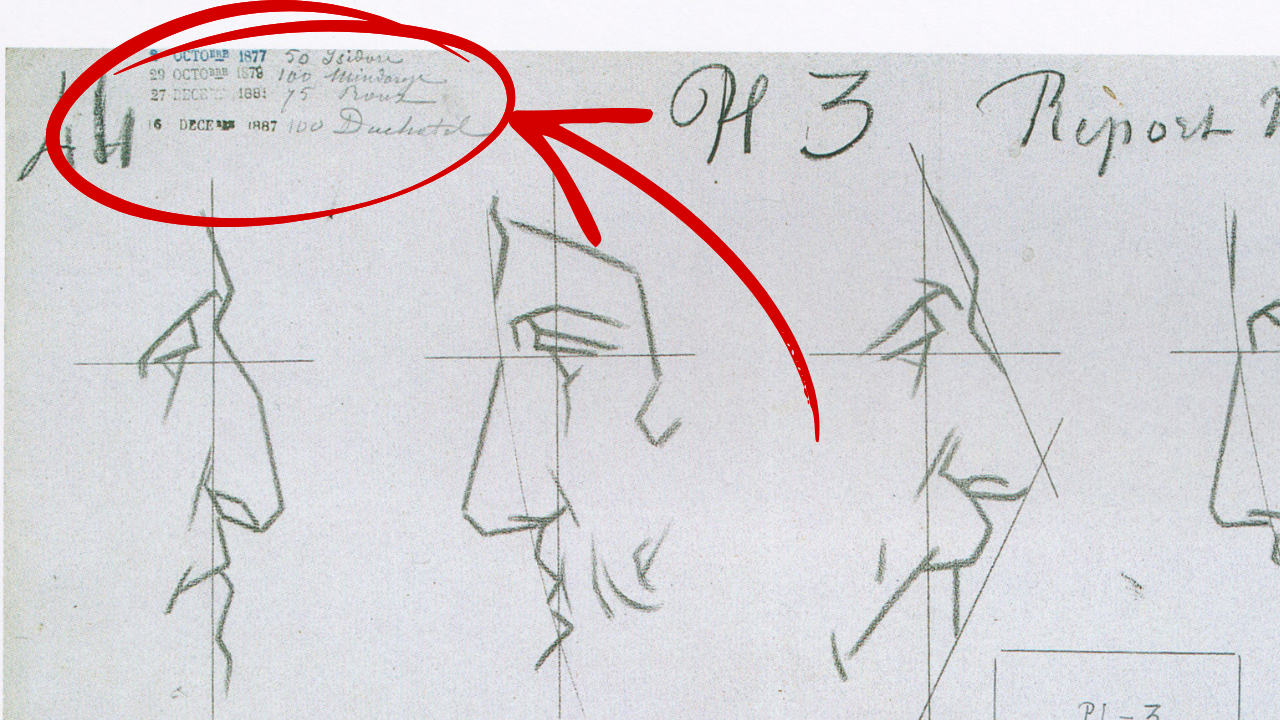
Bargue Plate #3 with date stamps and signatures from the late 1800s.
Also my understanding was that in its original use, the lithographs were checked out in a similar way to library books: A stamp was placed with the date the lithograph was borrowed along with the written name of the student. You can see many of these stamps and dates on the scans in the modern reprinting, and I enjoy feeling a connection with artists who studied long before I was even born.
I personally own a copy of the Dahesh Museum reprint from 2003 which looks like this and I highly recommend:
Charles Bargue and Jean-Leon Gerome: Drawing Course
There appear to be less expensive options out there, which I do not own, and have mixed reviews. There's no instruction, but if the print quality is good it may be worth having a copy:
Complete Bargue Drawing Course: New Improved Second Edition
Finally, you can download a PDF of the Charles Bargue Drawing Course in the Internet Archive.
Plaster Casts
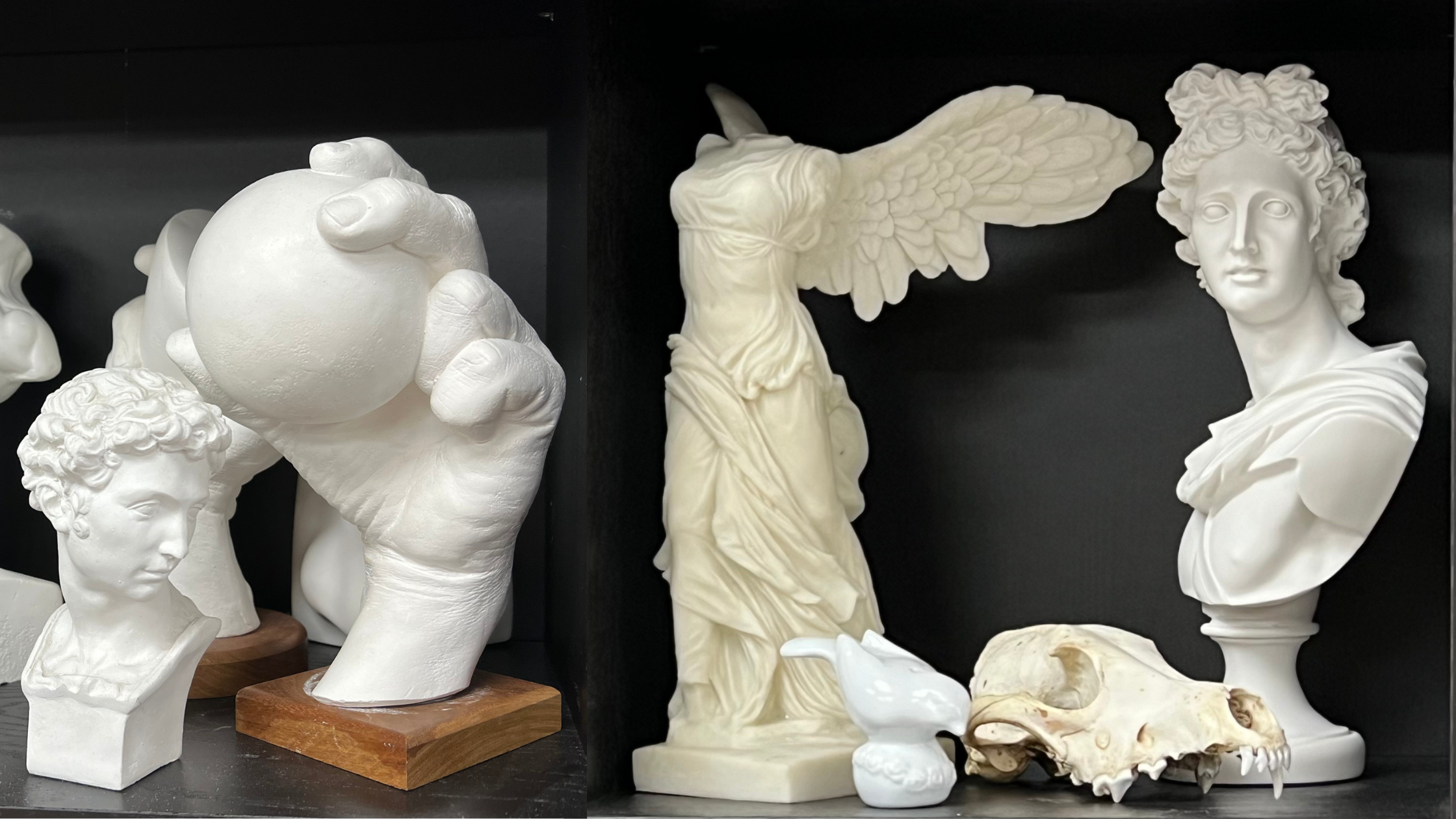 Plaster casts were used as the next stage of training because it added the third dimension without also adding color, sheen, or movement. Casts are a matte white, meaning that light and shadow is expressed without the qualities of the cast interrupting. Since they don't move, like a human model would, an artist can take all the time necessary to make measurements and changes.
Art schools used to be equipped with a collection of plaster casts for study, but many were destroyed or disposed of during the modern art movements. Luckily, one can find plaster casts thanks to the renewed interest in classical arts, and I'll list some sellers below. Some suitable items can be found on Amazon as well, but be careful of buying very small plaster busts: Working from a head that's only a few inches tall is really not good practice.
Here are some good resources for plaster casts:
*A quick note: I have visited a showroom of a place that had large and inexpensive plaster casts. Beware! It looked like the molds had been slightly squished, so the proportions of faces were mushed. You might not notice this in a photo online. It's worth it to spend the money on a good cast.*
Modern Atelier Practice
Now that more than two decades have passed since classical training started to make a comeback, you can find all kinds of approaches and ideas incorporated with these methods in practically any major city and online. What's exciting to me is that whereas classical approaches felt very separate from all others when I was just starting out, artists and schools are pulling from multiple toolboxes to create truly creative and expansive work.
Many ateliers offer full time programs, and students will spend weeks working daily on a single Bargue plate or cast drawing. The process is slow and methodical, and the results are incredible.
Classical Drawing at School of Realist Art
Here at School of Realist Art, the philosophy is that Classical Drawing is one spoke on the big wheel of art methods and approaches. It has its pros and cons, just like other approaches, but can prove a vital foundation for any realist artist concerned with correct proportion and drawing. It shouldn't be relied upon as the only drawing method, but studied along with other more dynamic and flexible approaches.
This will lead a student to be able to apply sight-size techniques when needed and appropriate, such as when painting a portrait where accuracy is key, or others where measuring would prove inhibitive, like when sketching at the zoo or during a life drawing session of short poses.
Additionally, students here at School of Realist Art tend to have other commitments outside of class time and cannot dedicate several hours daily to their practice. We make it work! The principles of the process aren't skimped upon; to make the projects more approachable we focus on one beginner to intermediate Bargue plate rather than working through complex and time consuming examples. We keep the plaster cast drawings a manageable size and work in charcoal, expediting the shading process.
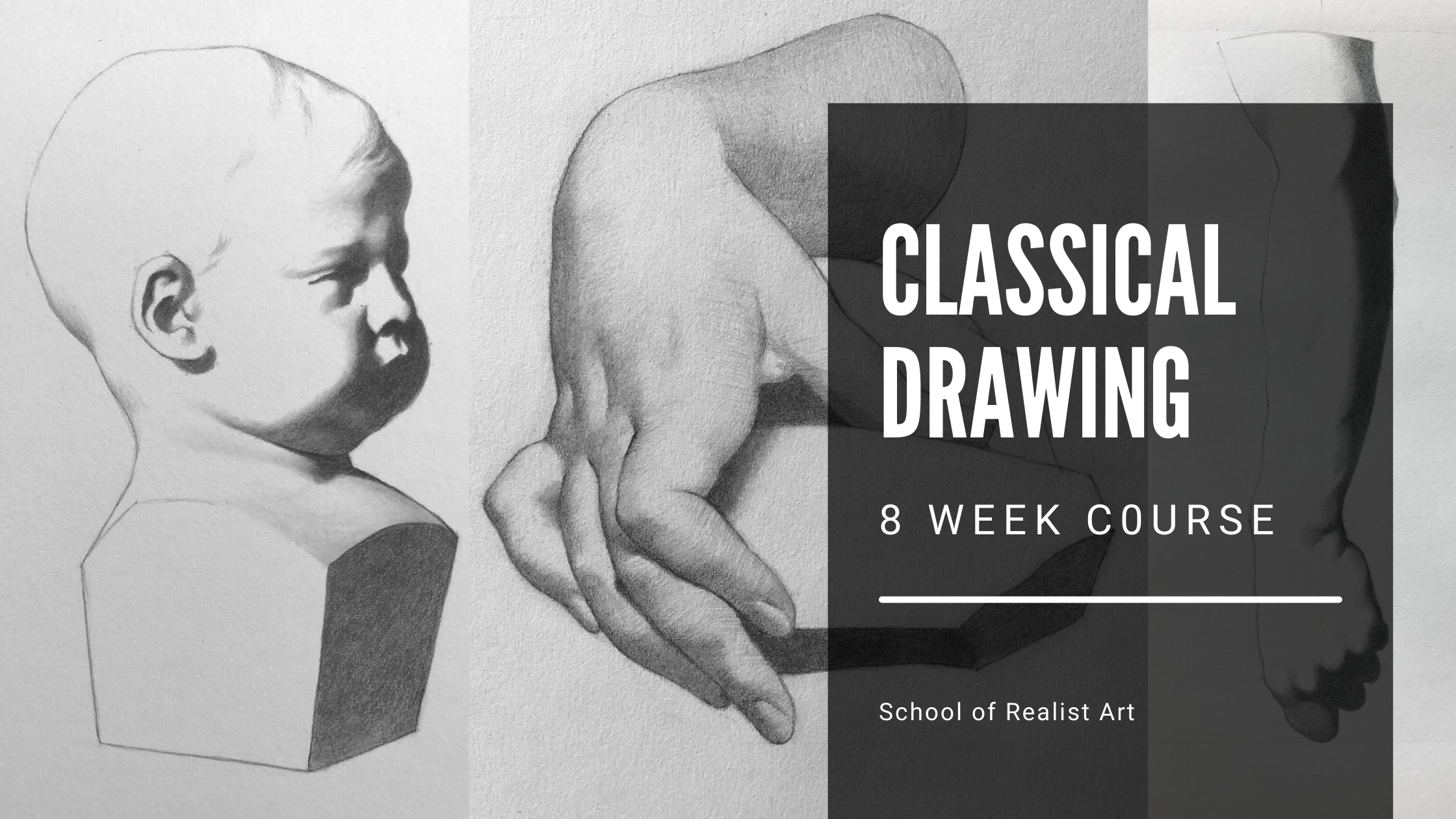
Classical Drawing is a class covering beginning concepts, a Bargue plate project, and a plaster cast project, over the course of 8 weeks. It's a great foundation for branching off into other approaches or continuing into painting, or it's a playbook for continued study with more complex Bargue plates and plaster casts outside of class time.
The same concepts related to sight size and measuring are also lightly covered in both Foundations of Drawing and Portrait Drawing in Graphite and Charcoal. Both of these classes begin with what I call sight-size-light before moving on to more dynamic approaches to drawing. This gives you exposure to a variety of techniques.
More Info on Different Drawing Approaches
If you'd like to have a further comparison and understanding of the pros and cons of the Classical Drawing approach and other methods of drawing, check out this recent article that delves deep into that subject:

I hope you found this article helpful; Happy drawing!
~Lacey
Stay connected with news and updates!
Join our mailing list to receive the latest news and updates from our team.
Don't worry, your information will not be shared.
We hate SPAM. We will never sell your information, for any reason.

